Philadelphia Phillies vs Cincinnati Reds Match Player Stats
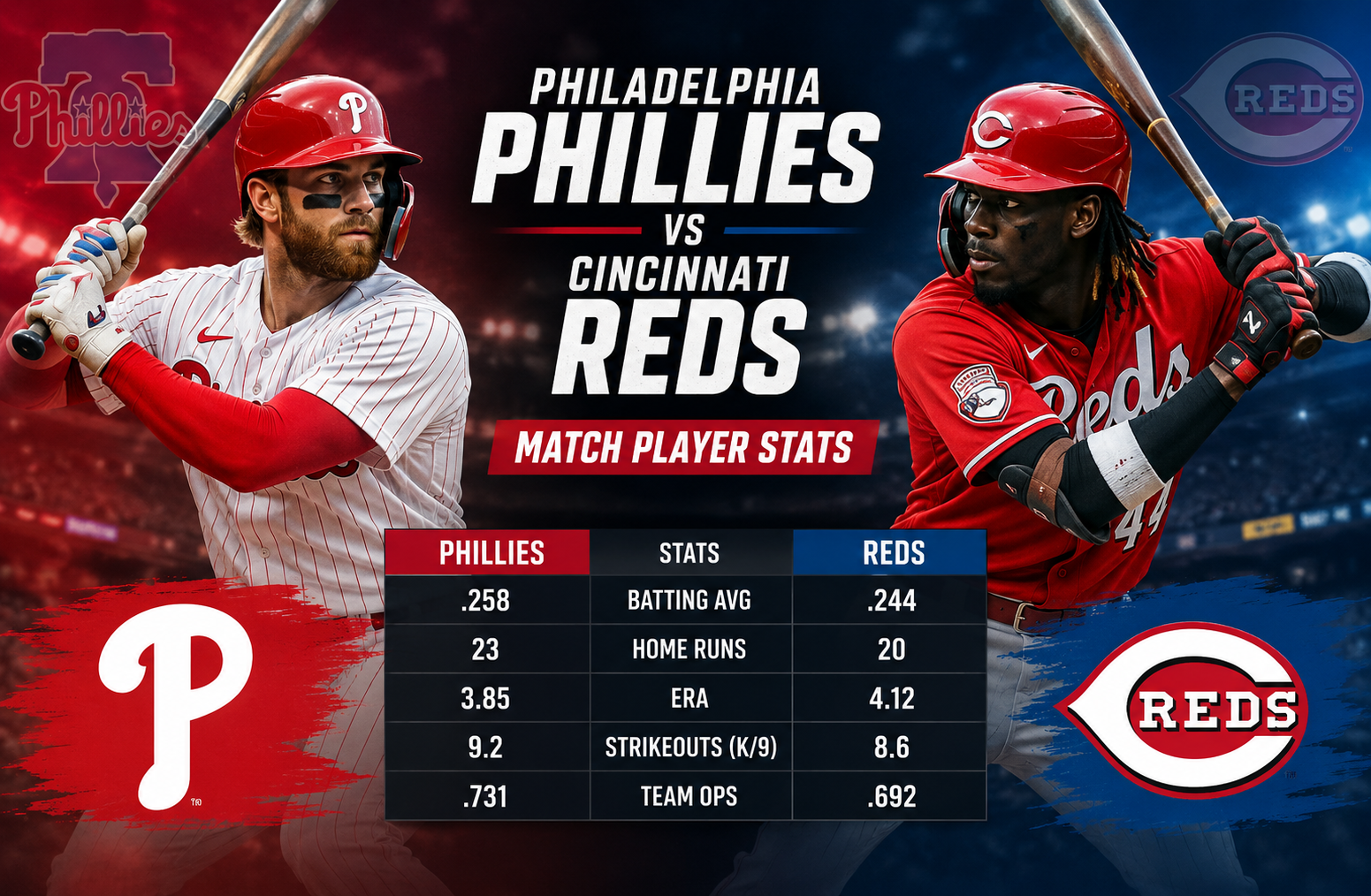
The Philadelphia Phillies vs Cincinnati Reds Match Player Stats tell a much bigger story than just runs and hits. Every inning between these two National League clubs often reveals tactical decisions, bullpen depth, batting consistency, and defensive execution that shape the final result. Fans searching for player statistics usually want more than a box score. They want context, standout performances, momentum swings, and a clear understanding of how individual players influenced the game.
When analyzing the Philadelphia Phillies and Cincinnati Reds, the contrast in playing styles becomes obvious. Philadelphia typically relies on experienced hitters, strong plate discipline, and proven pitching rotations. Cincinnati often counters with speed, athleticism, aggressive baserunning, and younger talent capable of explosive offensive innings.
This detailed breakdown explores batting numbers, pitching performances, defensive impact, advanced metrics, player comparisons, and tactical insights from recent matchups between these franchises. Instead of simply listing statistics, this article explains what those numbers actually mean for fans, analysts, fantasy baseball followers, and bettors.
Understanding Why Match Player Stats Matter
Baseball statistics are more than entertainment. They reveal patterns, consistency, weaknesses, and momentum.
In a Phillies versus Reds matchup, player stats help answer several important questions:
- Which hitters performed under pressure?
- Which pitchers controlled the strike zone effectively?
- How did bullpen management affect the outcome?
- Which defensive plays changed momentum?
- Were star players efficient or inconsistent?
Modern baseball analysis goes beyond batting average and ERA. Metrics such as OPS, WHIP, slugging percentage, strikeout rate, and on base percentage provide a deeper understanding of player value.
For fans following season trends, these numbers help predict future performances and identify players entering strong form.
Key Offensive Performances
Philadelphia Phillies Batting Analysis
Philadelphia’s lineup is usually built around power hitting and patient at bats. In recent meetings against Cincinnati, several Phillies hitters consistently produced quality offensive numbers.
Bryce Harper’s Offensive Impact
Bryce Harper remains the emotional and offensive centerpiece of the Phillies lineup. Against Cincinnati pitching, Harper often excels at driving runners home in clutch situations.
Key statistical contributions commonly include:
- Multiple extra base hits
- High on base percentage
- Strong slugging numbers
- Productive plate appearances with runners in scoring position
Harper’s value goes beyond home runs. His ability to force pitchers into difficult counts frequently creates opportunities for hitters behind him.
Trea Turner’s Speed and Contact Hitting
Trea Turner adds another dimension through speed and consistent contact. Against aggressive Reds pitching, Turner frequently pressures defenses with:
- Infield singles
- Stolen base attempts
- Gap hitting
- Quick first inning production
Turner’s presence often changes defensive positioning and pitching strategy.
Kyle Schwarber’s Power Numbers
Kyle Schwarber remains one of the most dangerous left handed power bats in the National League. Even when his batting average fluctuates, his slugging percentage and walk rate continue to impact games significantly.
Against Cincinnati, Schwarber has historically produced:
- Long fly balls
- High exit velocity contact
- Leadoff home run threats
- Deep counts that exhaust pitchers
Cincinnati Reds Offensive Highlights
Elly De La Cruz and Dynamic Athleticism
Elly De La Cruz has become one of baseball’s most exciting young players. His athletic profile creates pressure on opposing defenses every inning.
Against Philadelphia pitching, De La Cruz often contributes through:
- Stolen bases
- Hard contact
- Defensive range
- Extra base power
His combination of speed and raw strength forces pitchers to vary timing and delivery mechanics.
Spencer Steer’s Consistency
Spencer Steer has quietly become one of Cincinnati’s most dependable hitters. He frequently delivers balanced offensive production through disciplined at bats.
Important statistical strengths include:
- Solid batting average
- Reliable RBI production
- Good situational hitting
- Improved plate discipline
Steer’s approach helps stabilize the Reds lineup during difficult stretches.
Jonathan India’s Table Setting Ability
Jonathan India contributes through patience and smart baserunning. His ability to reach base early in games frequently sets the tone for Cincinnati’s offense.
Key strengths include:
- Walk generation
- Pitch recognition
- Contact hitting
- Situational awareness
Pitching Matchup Analysis
Pitching usually determines the outcome when the Phillies and Reds face each other. Offensive explosions are possible, but bullpen execution often becomes the deciding factor late in games.
Starting Pitchers Comparison
Zack Wheeler’s Command and Velocity
Zack Wheeler consistently ranks among the league’s most reliable starters. His combination of fastball velocity and command creates problems for aggressive hitters.
Against Cincinnati lineups, Wheeler often succeeds because of:
- High strikeout totals
- Efficient innings
- Limited walks
- Ground ball generation
His ability to work deep into games also protects Philadelphia’s bullpen.
Aaron Nola’s Tactical Approach
Aaron Nola relies more on movement and sequencing than overpowering velocity. When facing younger Reds hitters, Nola often uses off speed pitches to disrupt timing.
Important statistical categories include:
- Strikeout to walk ratio
- First pitch strike percentage
- Curveball effectiveness
- Opponent batting average
Hunter Greene’s Explosive Fastball
Hunter Greene gives Cincinnati elite velocity from the mound. His fastball can dominate lineups when command remains consistent.
Against Philadelphia hitters, Greene’s success usually depends on:
- Avoiding walks
- Limiting home runs
- Maintaining pitch efficiency
- Executing secondary pitches
When Greene locates effectively, he can neutralize even elite hitters.
Nick Lodolo’s Left Handed Advantage
Nick Lodolo presents difficult angles and movement for opposing hitters. Philadelphia’s left handed bats sometimes struggle against his delivery mechanics and breaking pitches.
Bullpen Performance and Late Inning Execution
Bullpen statistics often decide close Phillies versus Reds contests.
Phillies Relief Pitching
Philadelphia’s bullpen has improved significantly in recent seasons because of better strike throwing and defined roles.
Important bullpen metrics include:
- WHIP
- Save conversion rate
- Strikeout percentage
- Inherited runners scored
Late inning relievers capable of handling pressure situations become critical during tight divisional races.
Reds Bullpen Strengths
Cincinnati’s bullpen often relies on velocity and aggressive attack strategies. Younger relievers can produce dominant stretches, though consistency occasionally becomes an issue.
Key evaluation areas include:
- High leverage ERA
- Walk percentage
- Opponent OPS
- Performance with runners on base
Defensive Contributions Often Ignored
Many fans focus only on hitting and pitching, but defensive execution frequently changes outcomes in Phillies and Reds matchups.
Philadelphia Defensive Strengths
The Phillies benefit from experienced defenders who understand positioning and situational baseball.
Defensive highlights often include:
- Double play efficiency
- Strong outfield arms
- Defensive communication
- Smart cutoff execution
Cincinnati’s Athletic Defensive Range
The Reds frequently showcase exceptional speed and range defensively.
Important contributions include:
- Difficult infield stops
- Outfield tracking ability
- Quick transition throws
- Defensive recovery speed
Athleticism allows Cincinnati to prevent extra base hits that many teams would surrender.
Advanced Metrics That Explain the Game Better
Traditional baseball stats only tell part of the story.
Advanced analytics provide a deeper evaluation of player effectiveness during Phillies versus Reds games.
OPS
OPS combines on base percentage with slugging percentage.
A high OPS usually indicates:
- Power hitting
- Consistent offensive production
- Ability to create scoring opportunities
WHIP
WHIP measures walks and hits allowed per inning pitched.
Lower WHIP numbers generally reflect:
- Better command
- Fewer baserunners
- Greater pitching efficiency
Exit Velocity
Exit velocity measures how hard hitters strike the baseball.
Higher exit velocity often predicts:
- Better offensive consistency
- More extra base hits
- Increased scoring potential
WAR
Wins Above Replacement estimates a player’s total value compared to an average replacement level player.
Analysts often use WAR to compare all around player effectiveness.
For a deeper understanding of modern baseball analytics, the official MLB glossary provides trusted explanations of advanced metrics.
Head to Head Team Trends
The Phillies and Reds have produced several competitive games in recent years, especially when both teams enter strong offensive stretches.
Common Trends in These Matchups
- Philadelphia often relies on power hitting
- Cincinnati pressures defenses through speed
- Bullpen depth becomes important late
- Pitching command usually decides close games
Games between these teams can shift rapidly because both lineups are capable of scoring in bunches.
Most Important Player Stats Fans Watch
When reviewing a Phillies versus Reds matchup, fans usually focus on several core statistics.
Batting Statistics
- Batting average
- Home runs
- RBI totals
- On base percentage
- Slugging percentage
Pitching Statistics
- ERA
- Strikeouts
- Walks allowed
- Innings pitched
- WHIP
Defensive Statistics
- Fielding percentage
- Errors
- Defensive runs saved
- Assists
These categories help create a complete picture of player performance.
Philadelphia Phillies vs Cincinnati Reds Match Player Stats and Game Momentum
The Philadelphia Phillies vs Cincinnati Reds Match Player Stats often reveal momentum swings that are not obvious from the final score alone.
For example:
- A hitter drawing multiple walks may disrupt a pitcher’s rhythm
- A stolen base can completely alter defensive positioning
- One defensive stop can prevent a multi run inning
- Bullpen efficiency may protect a narrow lead
Context matters as much as raw statistics.
A player finishing 1 for 4 might still influence the game significantly through defense, baserunning, or clutch situational hitting.
Real World Importance for Fantasy Baseball Players
Fantasy baseball managers heavily analyze Phillies and Reds player statistics because these teams feature several high upside performers.
Valuable Fantasy Categories
Phillies
- Harper for power and RBI
- Turner for stolen bases
- Wheeler for strikeouts
- Schwarber for home runs
Reds
- De La Cruz for multi category production
- Greene for strikeout upside
- India for runs scored
- Steer for balanced offensive numbers
Fantasy managers often monitor matchup history because certain players perform especially well against specific pitching styles.
Tactical Strategies Behind the Numbers
Statistics only become meaningful when connected to tactical decisions.
Philadelphia’s Strategic Style
The Phillies generally prioritize:
- Patience at the plate
- Driving up pitch counts
- Power hitting opportunities
- Experienced lineup management
Cincinnati’s Strategic Style
The Reds frequently emphasize:
- Aggressive baserunning
- Defensive athleticism
- Quick offensive pressure
- Young player development
These stylistic differences create entertaining and unpredictable matchups.
Challenges Both Teams Commonly Face
Phillies Challenges
Even talented Philadelphia rosters sometimes struggle with:
- Bullpen inconsistency
- Defensive lapses
- Strikeout heavy innings
- Reliance on power hitting
Reds Challenges
Cincinnati often faces issues involving:
- Young roster inconsistency
- Pitching command
- Defensive decision making
- High pressure situations
These weaknesses frequently appear in statistical trends across long seasons.
How Analysts Evaluate Match Player Stats
Professional analysts rarely judge players using one statistic alone.
Instead, they evaluate:
- Recent form
- Matchup history
- Injury status
- Ballpark effects
- Weather conditions
- Pitch type matchups
For example, a hitter with strong numbers against fastballs may perform well against velocity heavy pitchers.
This deeper level of analysis separates advanced baseball evaluation from simple box score reading.
The Role of Ballpark Conditions
Ballpark dimensions and weather conditions can significantly affect player statistics.
Philadelphia Home Conditions
Citizens Bank Park is known for rewarding power hitters, especially during warm weather conditions.
Cincinnati Home Conditions
Great American Ball Park is also considered hitter friendly, which can increase offensive numbers dramatically.
Because both stadiums favor offense, pitching statistics in these matchups require proper context.
Why Young Talent Makes This Rivalry Interesting
One of the most compelling aspects of Phillies versus Reds matchups is the contrast between experience and youth.
Philadelphia often depends on veteran leadership and playoff experience.
Cincinnati continues building around energetic young athletes capable of transforming games quickly.
This creates fascinating statistical battles:
- Veterans versus high velocity pitchers
- Young hitters versus elite command pitchers
- Experience versus athletic unpredictability
Statistical Categories That Often Predict Winners
Several metrics frequently correlate with winning outcomes in Phillies and Reds games.
First Category: Runners in Scoring Position
Teams converting scoring opportunities usually gain a major advantage.
Second Category: Bullpen WHIP
Relievers limiting baserunners frequently determine close game outcomes.
Third Category: Defensive Errors
One defensive mistake can completely shift momentum.
Fourth Category: Strikeout Differential
Teams producing more strikeouts while limiting offensive strikeouts generally perform better.
Media and Fan Reactions to Player Stats
Modern baseball fans analyze statistics more deeply than ever before.
Social media discussions often focus on:
- Advanced metrics
- Clutch performance
- Trade value
- MVP potential
- Pitching efficiency
The growth of analytics has changed how fans interpret player performances.
A player can now receive praise even after a hitless game if underlying metrics suggest strong contact quality and discipline.
Historical Perspective on Phillies and Reds Matchups
The Phillies and Reds both hold rich histories within Major League Baseball.
Philadelphia Phillies have traditionally been associated with strong fan support, offensive stars, and postseason ambition.
Cincinnati Reds carry one of baseball’s oldest legacies and remain connected to generations of baseball history.
Their matchups continue evolving as roster construction philosophies change across modern baseball.
What Makes Certain Player Stats Misleading
Not all statistics accurately represent player value.
For example:
- Batting average ignores walks
- ERA can hide defensive mistakes
- RBI totals depend on teammates reaching base
- Wins are not always fair measures for pitchers
This is why modern analysts combine traditional and advanced statistics together.
Balanced evaluation produces more accurate conclusions.
Key Takeaways From Recent Matchups
Several consistent themes appear when evaluating recent Phillies versus Reds statistics.
Offensive Production Matters Early
Fast starts frequently force opposing pitchers into difficult situations.
Bullpens Decide Tight Games
Late inning execution consistently shapes outcomes.
Defensive Discipline Is Critical
Avoiding errors becomes especially important in high scoring environments.
Star Players Usually Influence Momentum
Elite talent often performs best during pressure situations.
FAQs
What are the most important stats in Phillies vs Reds games?
The most important statistics usually include batting average with runners in scoring position, strikeout totals, bullpen WHIP, OPS, and defensive errors.
Which Phillies players usually perform best against Cincinnati?
Players like Bryce Harper, Trea Turner, and Kyle Schwarber often generate strong offensive production because of their combination of power, discipline, and experience.
Why are advanced metrics important in baseball analysis?
Advanced metrics provide deeper insight into player effectiveness beyond traditional stats like batting average or ERA.
Which Reds player creates the biggest matchup problem?
Elly De La Cruz creates major challenges because of his speed, power, defensive range, and ability to impact games in multiple ways.
Do ballparks affect player stats significantly?
Yes. Both Citizens Bank Park and Great American Ball Park are considered hitter friendly stadiums, which can increase offensive production.
Why do bullpen stats matter so much?
Bullpen performance becomes critical during close games because relievers often protect narrow leads in late innings.
Conclusion
The Philadelphia Phillies and Cincinnati Reds consistently produce compelling baseball matchups filled with offensive bursts, pitching battles, and momentum changing moments. Looking closely at player statistics reveals far more than a final score. It explains strategy, execution, pressure performance, and roster strengths.
The Philadelphia Phillies vs Cincinnati Reds Match Player Stats provide valuable insight for fans, analysts, fantasy baseball players, and anyone interested in understanding the game at a deeper level. From Bryce Harper’s leadership and power to Elly De La Cruz’s explosive athleticism, these matchups showcase multiple styles of modern baseball.
Evaluating advanced metrics alongside traditional numbers creates a clearer understanding of player value and game impact. Whether analyzing bullpen efficiency, clutch hitting, or defensive range, statistics remain one of the best ways to understand why games unfold the way they do.