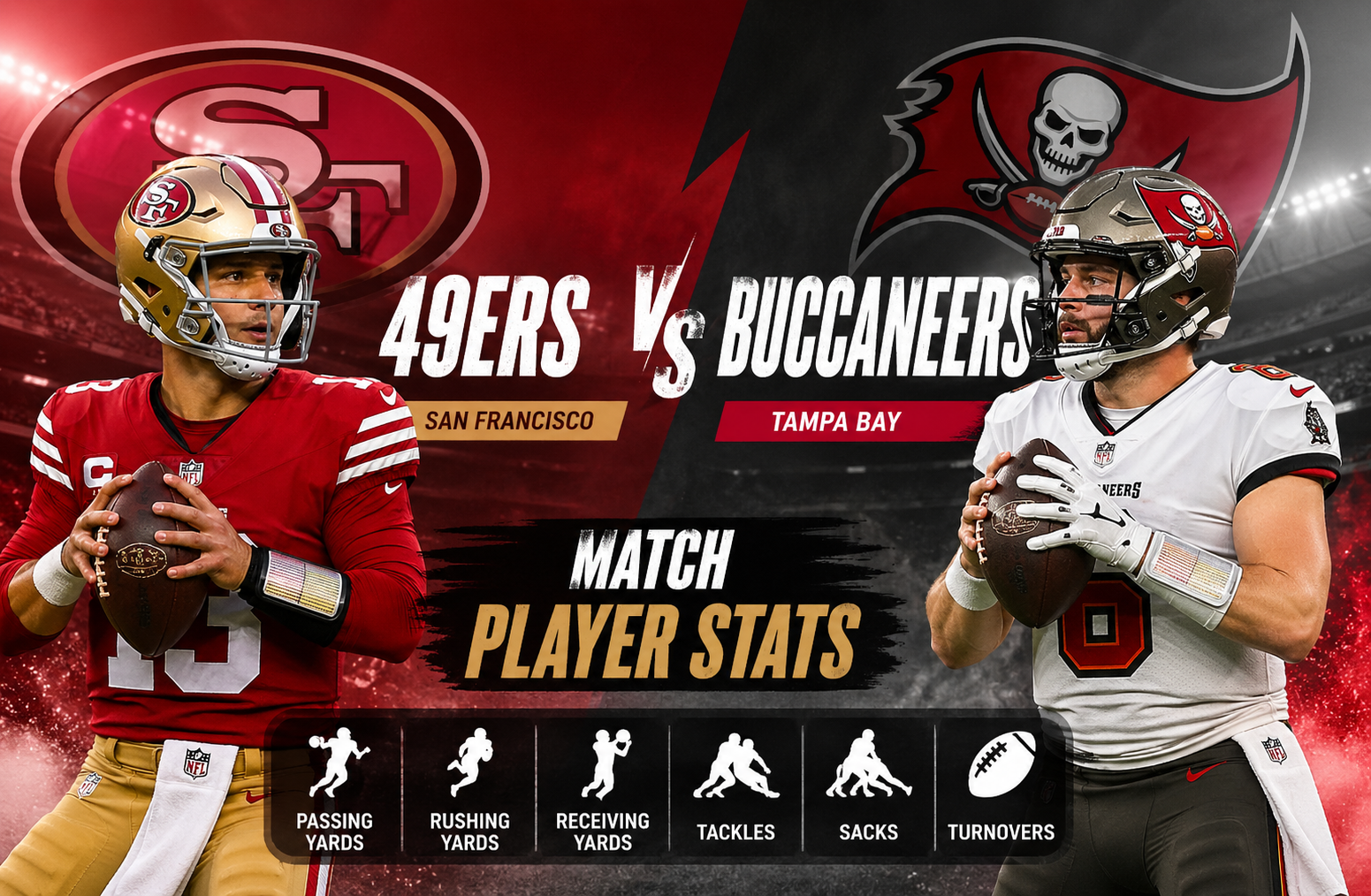
San Francisco 49ers vs Tampa Bay Buccaneers Match Player Stats
When analyzing an NFL matchup like the clash between the San Francisco 49ers and the Tampa Bay Buccaneers, most fans are not just looking for the final score. They want a deeper understanding of player performance, tactical execution, and how individual contributions shape the outcome of the game.
This article explores match player stats in a way that goes beyond surface level numbers. It breaks down offensive and defensive performances, highlights key players, and explains what these statistics actually mean in real game situations. The goal is to help you interpret the data like a seasoned analyst, not just a casual observer.
Understanding Match Player Stats in NFL Games
Player statistics in an NFL game provide a detailed snapshot of how each athlete contributes. However, raw numbers alone can be misleading if not interpreted correctly.
Key Categories of Player Stats
Offensive Stats
- Passing yards, completion percentage, touchdowns
- Rushing attempts, yards per carry
- Receiving yards, receptions, yards after catch
Defensive Stats
- Tackles and assisted tackles
- Sacks and quarterback pressures
- Interceptions and pass deflections
Special Teams
- Field goal accuracy
- Punt average
- Kick return yards
From experience analyzing NFL games, I have found that efficiency metrics matter more than volume. For example, a quarterback throwing 300 yards with 3 interceptions often contributes less to winning than one with 220 yards and zero turnovers.
Quarterback Performance Analysis
San Francisco 49ers Quarterback Impact
The 49ers have built their offensive identity around efficiency, quick reads, and strong play design. Their quarterback performance typically reflects:
- High completion percentage due to short to intermediate passes
- Effective use of play action
- Strong yards after catch from receivers
In matchups against Tampa Bay, 49ers quarterbacks often focus on exploiting zone coverage schemes. The key stat to watch is yards after catch, which indicates how well receivers are creating plays after the throw.
Tampa Bay Buccaneers Quarterback Dynamics
The Buccaneers traditionally rely on a more aggressive passing attack. Their quarterback stats often include:
- Higher air yards per attempt
- Increased touchdown potential
- Greater risk of turnovers under pressure
In games against strong defensive fronts like the 49ers, quarterback pressure becomes a defining factor. Sacks and hurried throws directly impact completion rates and drive success.
Running Game Breakdown
49ers Rushing Efficiency
The 49ers are widely recognized for their elite rushing scheme. Their stats usually show:
- High yards per carry
- Balanced distribution among running backs
- Significant contribution from offensive line blocking
What stands out in real game scenarios is how the 49ers use motion and misdirection. This often leads to chunk plays rather than consistent small gains.
Buccaneers Run Defense vs Offense
Tampa Bay has historically emphasized strong run defense. However, when facing the 49ers:
- Gap discipline becomes critical
- Missed tackles significantly increase opponent yardage
- Defensive line penetration can disrupt timing
On offense, the Buccaneers tend to use the run game to complement their passing attack rather than dominate possession.
Wide Receivers and Tight Ends Performance
49ers Receiving Unit
The 49ers rely heavily on versatility in their receiving corps. Their stats often reveal:
- Moderate reception numbers but high efficiency
- Strong yards after catch
- Tight end involvement in both blocking and receiving
In actual gameplay, receivers are often used in motion to create mismatches. This leads to inflated YAC statistics, which are a hallmark of the 49ers offense.
Buccaneers Receiving Threats
The Buccaneers typically feature:
- Deep route specialists
- High touchdown potential
- Larger target share for primary receivers
Against the 49ers, separation becomes harder to achieve due to disciplined secondary coverage. This often leads to contested catches and lower completion percentages.
Defensive Player Stats Analysis
49ers Defensive Strengths
The 49ers defense is built on speed, discipline, and pressure. Key statistical indicators include:
- High sack totals
- Strong third down efficiency
- Limited explosive plays allowed
From a tactical standpoint, their defensive line often dictates the pace of the game. When they generate pressure without blitzing, it allows the secondary to maintain coverage integrity.
Buccaneers Defensive Approach
The Buccaneers defense focuses on:
- Aggressive blitz packages
- Turnover creation
- Red zone efficiency
However, against a system like the 49ers, overcommitting to blitzing can leave gaps in coverage. This is reflected in stats like yards allowed after catch and missed tackles.
Key Player Matchups to Watch
Offensive Line vs Defensive Line
This is often the most decisive battle in this matchup.
- 49ers offensive line aims to create running lanes
- Buccaneers defensive line focuses on penetration and disruption
The stat to watch here is quarterback pressure rate. It directly correlates with turnovers and scoring opportunities.
Secondary vs Receivers
- 49ers secondary prioritizes limiting big plays
- Buccaneers receivers aim for explosive gains
Interceptions and pass deflections are crucial indicators in this matchup.
Advanced Metrics That Matter
Yards After Catch
One of the most important stats in modern NFL analysis. The 49ers consistently rank high in this category due to their offensive design.
Pressure Rate
Pressure rate measures how often a quarterback is disrupted. It is more insightful than sack totals alone.
Third Down Conversion Rate
This stat reflects a team’s ability to sustain drives. In close games, it often determines the winner.
Real Game Insights from Past Matchups
Based on previous encounters between these teams:
- The 49ers tend to control tempo through the run game
- The Buccaneers rely on explosive passing plays
- Turnovers often decide the outcome
In games where the Buccaneers protect the football, they remain highly competitive. However, when pressured heavily, their offensive efficiency drops significantly.
Common Challenges in Interpreting Player Stats
Misleading High Yardage
A player can accumulate high yardage in garbage time, which does not reflect true impact.
Ignoring Context
Stats must be analyzed within game context:
- Score margin
- Time remaining
- Opponent strength
Overvaluing Single Metrics
No single stat tells the full story. A balanced approach is necessary for accurate analysis.
How to Analyze Match Player Stats Like an Expert
Step 1: Focus on Efficiency
Look at yards per attempt, completion rate, and third down conversions.
Step 2: Evaluate Impact Plays
Touchdowns, interceptions, and sacks often shift momentum.
Step 3: Consider Game Flow
Was the team leading or trailing? This affects play calling and stats.
Step 4: Compare Key Matchups
Analyze how specific players performed against their direct opponents.
Real World Application for Fans and Analysts
Understanding player stats helps in:
- Fantasy football decision making
- Betting analysis
- Game prediction accuracy
- Deeper appreciation of strategy
From personal experience, once you start focusing on efficiency and context rather than just totals, your understanding of the game improves significantly.
Frequently Asked Questions
What are the most important stats in a 49ers vs Buccaneers game?
Quarterback efficiency, rushing yards per carry, and defensive pressure rate are the most impactful.
Why are yards after catch important for the 49ers?
Their offensive system is designed to create space for receivers, making YAC a key performance indicator.
How does defense influence player stats in this matchup?
Strong defensive pressure can lower passing efficiency and increase turnovers, directly impacting offensive stats.
Are turnovers more important than total yardage?
Yes, turnovers often have a greater impact on the final result than total yardage.
How can fans use these stats effectively?
Fans can use them for fantasy sports, predictions, and understanding game strategy at a deeper level.
Conclusion
The matchup between the San Francisco 49ers and the Tampa Bay Buccaneers offers a fascinating contrast in styles. One team emphasizes efficiency, control, and structured execution, while the other thrives on explosive plays and aggressive tactics.
Player stats in this matchup reveal much more than numbers. They tell the story of how the game unfolds, who controls momentum, and which strategies succeed under pressure. By focusing on efficiency, context, and key matchups, you can gain a much deeper understanding of what truly drives performance on the field.