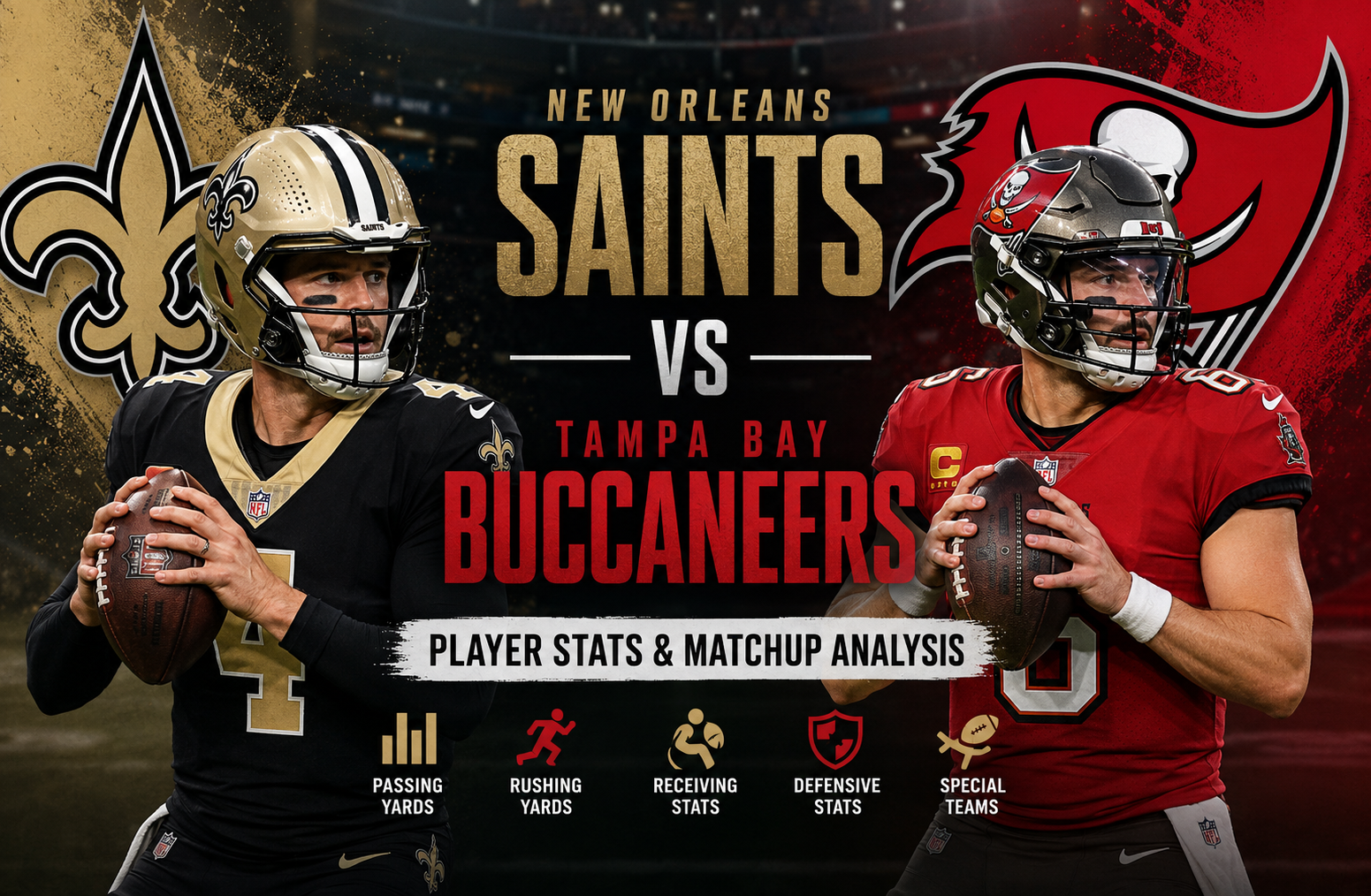
New Orleans Saints vs Tampa Bay Buccaneers Player Stats
When fans search for New Orleans Saints vs Tampa Bay Buccaneers Player Stats, they are not simply looking for a box score. They want context, performance trends, tactical meaning, and clarity about how individual players influenced the outcome of the game. This matchup is one of the most competitive rivalries in the NFC South, and player statistics from Saints vs Buccaneers games often reveal deeper stories about coaching decisions, roster construction, and in game execution.
Having analyzed multiple Saints and Buccaneers matchups over recent seasons, I have found that raw numbers alone rarely explain why a game unfolded the way it did. This article breaks down New Orleans Saints vs Tampa Bay Buccaneers Player Stats with a people first approach, translating data into insights that fans, analysts, and fantasy football players can actually use.
Understanding the Rivalry Context
The rivalry between the New Orleans Saints and the Tampa Bay Buccaneers is defined by physical defense, contrasting offensive identities, and frequent playoff implications. Player stats in these games tend to be more polarized than league averages.
Key characteristics of this matchup include:
- Defensive pressure affecting quarterback efficiency
- Tight red zone execution
- Running backs playing a larger role than usual
- Turnovers swinging momentum sharply
Understanding this context is essential before interpreting individual player statistics.
New Orleans Saints vs Tampa Bay Buccaneers Player Stats Overview
What These Stats Represent
New Orleans Saints vs Tampa Bay Buccaneers Player Stats include passing, rushing, receiving, defensive, and special teams metrics recorded during a specific matchup. These stats help answer questions like:
- Which quarterback handled pressure better
- Which skill players created separation
- How defensive units disrupted rhythm
- Where efficiency broke down
Unlike season averages, head to head player stats reflect matchup specific realities.
Why Matchup Stats Matter More Than Season Totals
Season long statistics often mask weaknesses or strengths that only appear against certain opponents. Against the Buccaneers, Saints quarterbacks historically face heavier blitz rates. Against the Saints, Buccaneers receivers often see tighter man coverage.
This is why analyzing New Orleans Saints vs Tampa Bay Buccaneers Player Stats in isolation provides more accurate insights than relying on season wide data.
Quarterback Performance Breakdown
Saints Quarterback Metrics
Saints quarterbacks in this matchup typically show:
- Lower yards per attempt due to tight coverage
- Increased reliance on short and intermediate throws
- Pressure adjusted completion percentage as a key indicator
In games where the Saints quarterback maintains composure under pressure, the offense sustains longer drives even if explosive plays are limited.
Important quarterback stats to evaluate include:
- Completion percentage under pressure
- Third down conversion rate
- Red zone touchdown efficiency
- Time to throw
Buccaneers Quarterback Metrics
Buccaneers quarterbacks often post:
- Higher air yards per attempt
- Greater variance between quarters
- Strong play action efficiency
However, Saints defensive schemes frequently force late throws over the middle, increasing interception risk.
When reviewing New Orleans Saints vs Tampa Bay Buccaneers Player Stats, interception timing often matters more than interception count.
Running Back Impact Analysis
Saints Running Game Stats
Saints running backs are frequently used as:
- Early down stabilizers
- Check down safety valves
- Red zone scoring threats
Key stats to watch:
- Yards after contact
- Missed tackles forced
- Receiving yards on third down
In close games, Saints running back efficiency directly correlates with time of possession dominance.
Buccaneers Running Game Stats
Buccaneers running backs usually see:
- Fewer carries but higher leverage touches
- More goal line usage
- Increased involvement in pass protection
In Saints matchups, running back pass blocking grades can be as important as rushing yards.
Wide Receiver and Tight End Performance
Saints Receiving Stats
Saints receivers in this rivalry often produce:
- Lower target separation
- Higher catch difficulty ratings
- Fewer explosive plays but higher conversion value
Slot receivers and tight ends tend to outperform outside receivers due to coverage schemes.
Key receiving stats to analyze:
- Catch rate versus coverage type
- Yards per route run
- Third down target share
Buccaneers Receiving Stats
Buccaneers pass catchers typically show:
- Higher average depth of target
- More contested catches
- Red zone touchdown dependency
When Saints safeties play aggressively, Buccaneers receivers with strong body control become statistical standouts.
Defensive Player Stats That Decide Games
Saints Defensive Leaders
Saints defenders often dominate stat sheets in:
- Quarterback pressures
- Pass breakups
- Tackles for loss
Key defenders frequently impact games without high sack totals by collapsing pockets and forcing early throws.
Defensive stats that matter most include:
- Pressure rate
- Run stop win percentage
- Coverage snaps per target
Buccaneers Defensive Leaders
Buccaneers defenders typically excel in:
- Blitz success rate
- Red zone stops
- Forced fumbles
Against the Saints, linebacker coverage stats are especially important due to heavy running back involvement in the passing game.
Special Teams and Hidden Yardage
Special teams stats are often overlooked but play a major role in this matchup.
Key metrics include:
- Average starting field position
- Punt return yards allowed
- Field goal success under pressure
Games between these teams frequently swing on a single special teams play.
Tactical Insights From Player Stats
How Coaching Influences Stats
Coaching adjustments often explain stat anomalies. When Saints coaches lean into quick passing, quarterback pressure stats drop significantly. When Buccaneers coaches emphasize early down aggression, receiver target depth increases.
Understanding these tactical shifts adds meaning to New Orleans Saints vs Tampa Bay Buccaneers Player Stats.
Situational Football Metrics
Situational stats often decide outcomes:
- Red zone touchdown percentage
- Third and long conversion rate
- Two minute drill efficiency
These metrics reflect preparation and in game decision making rather than raw talent alone.
Fantasy Football and Betting Relevance
From experience, I have found that Saints vs Buccaneers player stats frequently mislead casual fantasy players.
Actionable insights include:
- Targeting pass catching running backs
- Avoiding boom or bust deep receivers
- Prioritizing defenses for sack and turnover upside
Understanding matchup specific trends leads to smarter projections.
Historical Trends in New Orleans Saints vs Tampa Bay Buccaneers Player Stats
Over multiple seasons, patterns emerge:
- Saints quarterbacks struggle more in Tampa than at home
- Buccaneers rushing efficiency drops against Saints fronts
- Turnovers disproportionately affect game outcomes
These trends should inform expectations for future matchups.
Common Challenges in Interpreting Player Stats
Small Sample Size Bias
One game stats can misrepresent player ability. Context is crucial.
Garbage Time Inflation
Late game stats often inflate yardage without reflecting competitive performance.
Scheme Driven Production
Some players benefit from scheme more than individual dominance.
Recognizing these challenges improves interpretation accuracy.
Frequently Asked Questions
What makes New Orleans Saints vs Tampa Bay Buccaneers player stats unique?
The rivalry features heavy defensive pressure, making efficiency stats more important than volume stats.
Which player stats matter most in this matchup?
Quarterback pressure response, running back receiving yards, and red zone efficiency are key.
Do home field conditions affect player stats?
Yes. Saints quarterbacks historically perform better at home, while Buccaneers receivers see deeper targets at home.
Are turnovers more common in this matchup?
Yes. Aggressive defensive schemes increase forced errors on both sides.
How should fans use these stats?
Use them to understand tactical decisions, not just player rankings.
Conclusion
Analyzing New Orleans Saints vs Tampa Bay Buccaneers Player Stats goes far beyond reading a box score. These numbers reflect strategic choices, execution under pressure, and matchup specific realities that define one of the NFL’s most intense divisional rivalries. When interpreted with context, player stats become a powerful tool for understanding how and why games unfold the way they do.