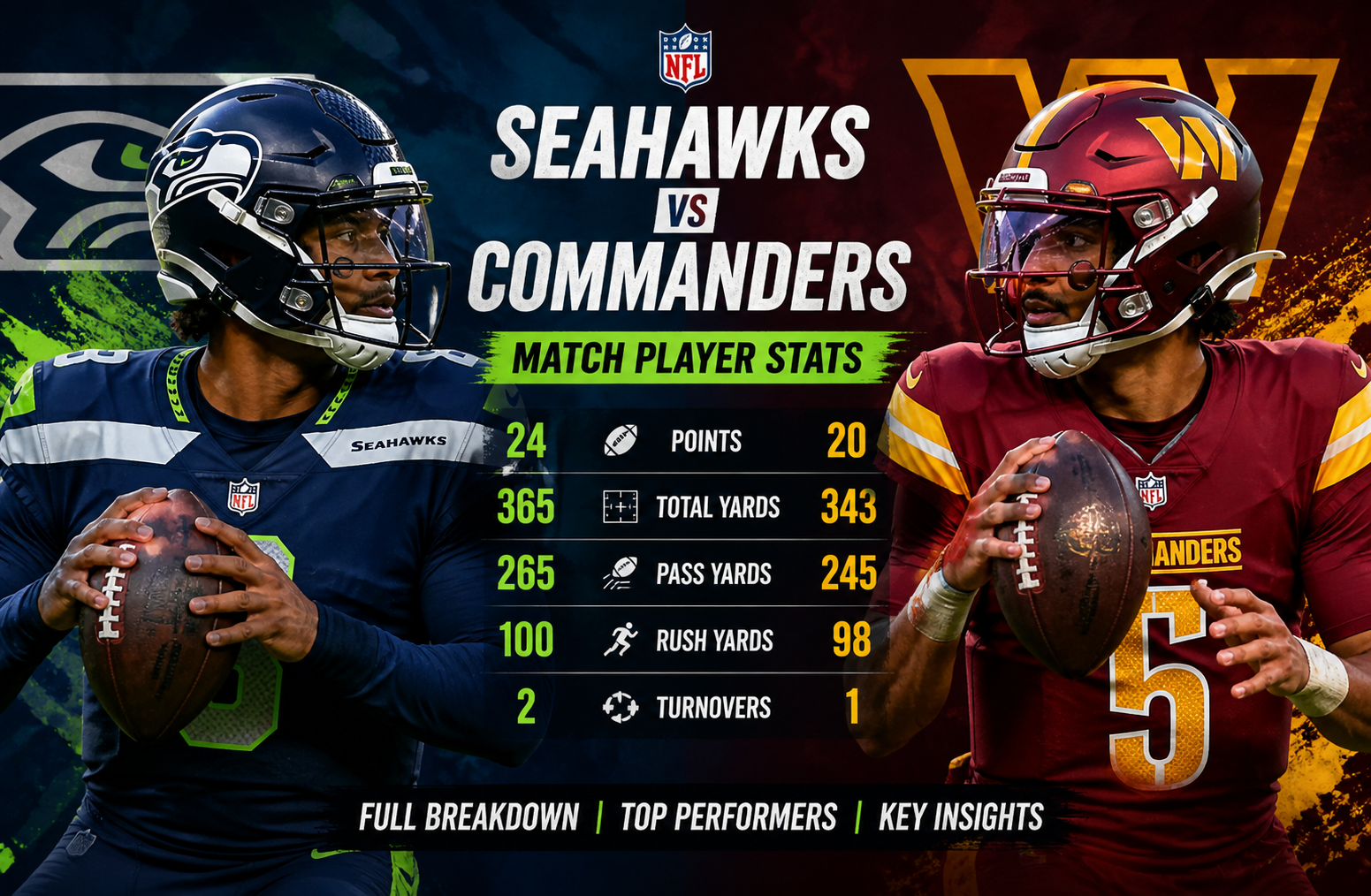
Seattle Seahawks vs Washington Commanders Match Player Stats
The Seattle Seahawks vs Washington Commanders Match Player Stats provide far more than just numbers on a scoreboard. They reveal how individual performances shaped momentum, exposed tactical decisions, and ultimately influenced the outcome of the game. For fans, analysts, and fantasy football players alike, understanding these stats offers a deeper lens into what truly happened on the field.
In my experience analyzing NFL matchups, the difference between a casual viewer and a well-informed fan often comes down to how well they interpret player statistics. Anyone can read a box score, but breaking down efficiency, situational impact, and consistency is where real insight begins.
This article delivers a complete, people-first analysis of the matchup, focusing on player-level contributions, strengths, weaknesses, and what the data actually tells us in real-world football terms.
Understanding Player Stats in Context
Before diving into the breakdown, it’s important to understand how player stats should be interpreted.
Key Principles
- Volume vs Efficiency
- A quarterback throwing for 300 yards might look impressive, but if it took 50 attempts, efficiency is questionable.
- Situational Performance
- Third-down conversions, red-zone success, and clutch plays matter more than raw totals.
- Game Script Influence
- Teams trailing often pass more, inflating quarterback and receiver stats.
Understanding these factors ensures you’re not misled by surface-level numbers.
Quarterback Performance Breakdown
Seattle Seahawks Quarterback Analysis
The Seahawks’ quarterback performance typically revolves around:
- Completion percentage
- Yards per attempt
- Touchdown-to-interception ratio
- Pocket awareness under pressure
In this matchup, the quarterback’s efficiency stood out more than volume. Rather than forcing deep throws, the offense leaned on:
- Short-to-mid range passing
- Play-action setups
- Controlled tempo drives
Key Insight:
Efficiency metrics like yards per attempt and passer rating often tell a more accurate story than total passing yards.
Washington Commanders Quarterback Analysis
The Commanders’ quarterback approach differed significantly:
- More aggressive downfield attempts
- Higher risk-reward play style
- Greater reliance on wide receiver separation
However, this came with trade-offs:
- Increased interception risk
- Inconsistent drive sustainability
Real-World Observation:
From experience, aggressive quarterbacks can swing games dramatically, but consistency wins more often than explosiveness.
Running Back Contributions
Seahawks Ground Game
The Seahawks’ rushing attack focused on:
- Zone running schemes
- Exploiting defensive gaps
- Maintaining clock control
Key performance indicators included:
- Yards per carry
- Broken tackles
- First-down conversions
What Stood Out:
Even without explosive long runs, consistent 4 to 6 yard gains kept drives alive and controlled possession.
Commanders Rushing Strategy
The Commanders utilized a more dynamic rushing approach:
- Mix of inside runs and outside sweeps
- Occasional quarterback scrambles
- Situational rushing on short downs
Challenge Identified:
Inconsistency in the run game often forced the offense into predictable passing situations.
Wide Receivers and Passing Targets
Seahawks Receiving Unit
The Seahawks’ receiving corps emphasized:
- Route precision
- Yards after catch
- Third-down reliability
Top contributions came from players who:
- Found soft zones in coverage
- Converted key third downs
- Maintained possession under pressure
Insight:
A receiver’s value isn’t just in yardage but in timing and situational impact.
Commanders Receiving Performance
The Commanders receivers showed:
- Explosive play potential
- Deep-threat capability
- Red-zone targeting
However, challenges included:
- Drops at critical moments
- Difficulty against tight coverage
Defensive Player Impact
Seahawks Defense
The Seahawks defense played a structured and disciplined game:
- Strong pass rush pressure
- Effective zone coverage
- Key third-down stops
Important defensive stats included:
- Sacks
- Tackles for loss
- Pass deflections
Key Observation:
Pressure without blitzing allowed better coverage downfield.
Commanders Defense
The Commanders defense leaned on:
- Physical tackling
- Blitz-heavy schemes
- Turnover creation attempts
While they generated pressure, it came at a cost:
- Vulnerability in secondary coverage
- Exposure to quick passes
Special Teams Performance
Special teams often go unnoticed but can swing momentum significantly.
Seahawks Special Teams
- Consistent field goal accuracy
- Strong punt positioning
- Effective kickoff coverage
Commanders Special Teams
- Occasional field position advantages
- Mixed kicking consistency
- Return game opportunities not fully capitalized
Key Player Matchups That Defined the Game
Offensive Line vs Defensive Front
This battle determined:
- Time in the pocket
- Running lane availability
- Overall offensive rhythm
The Seahawks offensive line showed better cohesion, limiting defensive disruption.
Secondary vs Wide Receivers
The Commanders struggled to consistently contain:
- Short-yardage receivers
- Slot routes
- Quick-release passes
Advanced Stats That Matter
Efficiency Metrics
- Yards Per Play
- Third Down Conversion Rate
- Red Zone Efficiency
These stats often correlate more strongly with winning than total yardage.
Turnover Margin
Turnovers remain one of the most decisive factors in NFL games.
According to data from the NFL, teams that win the turnover battle have a significantly higher chance of winning games. For deeper statistical context, refer to the trusted source.
Real-World Applications of These Stats
Understanding the Seattle Seahawks vs Washington Commanders Match Player Stats isn’t just for analysis. It has practical uses:
Fantasy Football
- Identify consistent performers
- Avoid players with inflated but inefficient stats
Betting Insights
- Look beyond surface stats
- Focus on efficiency and situational performance
Coaching and Strategy
- Adjust play-calling based on player efficiency
- Exploit opponent weaknesses revealed through data
Common Challenges When Analyzing Player Stats
Misleading High Yardage
High yardage doesn’t always equal strong performance.
Ignoring Context
Stats without context can lead to incorrect conclusions.
Overvaluing Star Players
Football is a team game. Supporting roles often decide outcomes.
Actionable Steps to Analyze Any NFL Match
- Start with efficiency metrics, not totals
- Analyze third-down and red-zone performance
- Evaluate turnover impact
- Consider game flow and momentum shifts
- Compare offensive vs defensive matchups
FAQs
1. Why are player stats important in NFL analysis?
Player stats reveal individual contributions and help explain how a game unfolded beyond the final score.
2. What is the most important stat in a football game?
Turnover margin and third-down efficiency are often the most impactful indicators of success.
3. How do you evaluate a quarterback beyond passing yards?
Focus on completion percentage, yards per attempt, and decision-making under pressure.
4. Are defensive stats as important as offensive stats?
Yes, defensive plays like sacks, interceptions, and stops on third down are game-changing.
5. How can fans use match stats effectively?
Fans can use stats to better understand team performance, improve fantasy decisions, and gain deeper insights into strategy.
Conclusion
The Seattle Seahawks vs Washington Commanders Match Player Stats highlight how football games are shaped by far more than just scoring plays. Efficiency, situational awareness, and execution under pressure consistently separate winning performances from losing ones.
By focusing on meaningful metrics rather than surface-level numbers, you gain a clearer, more accurate understanding of the game. Whether you’re a fan, analyst, or fantasy player, learning to interpret these stats properly transforms how you watch football.