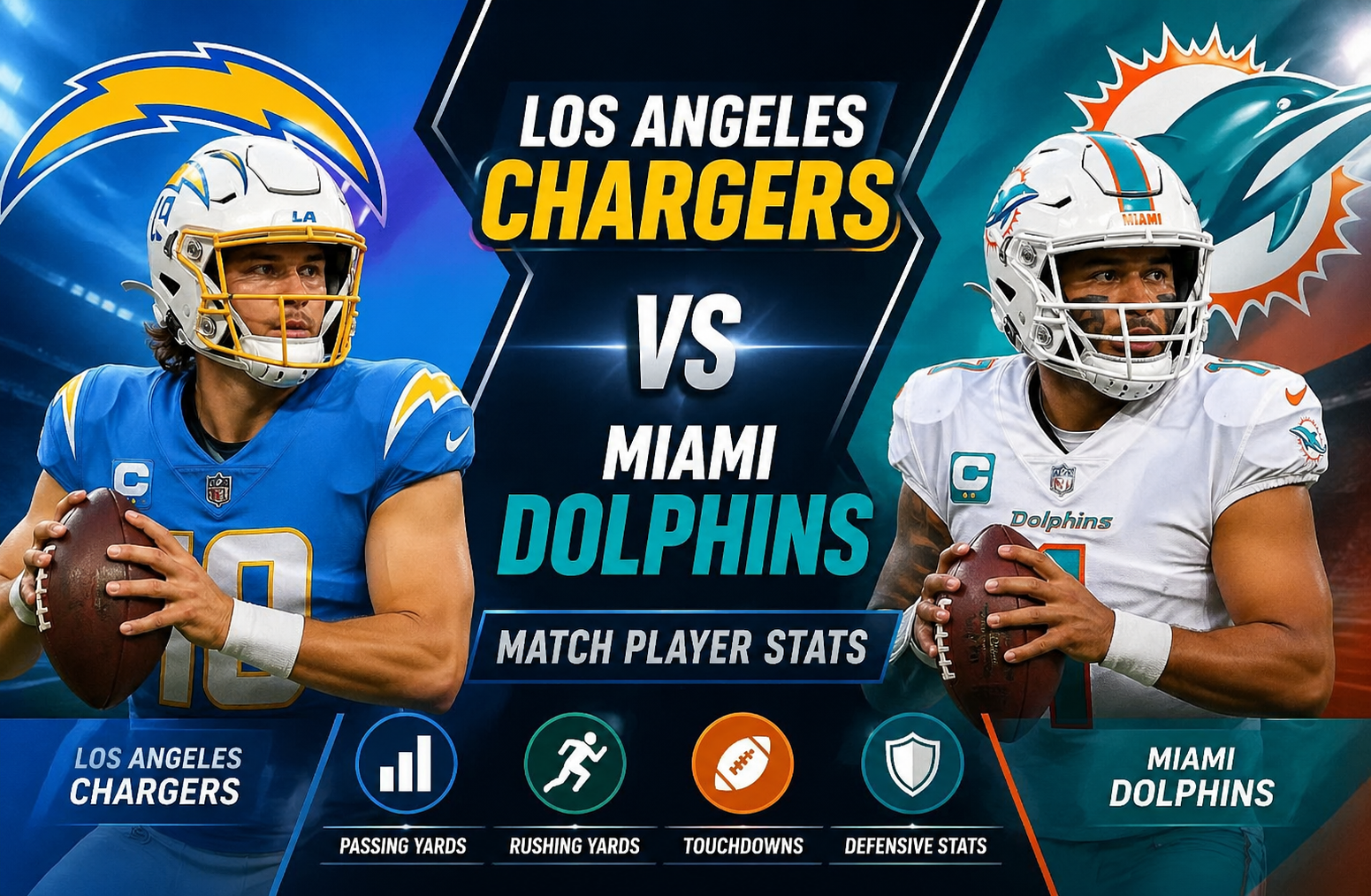
Los Angeles Chargers vs Miami Dolphins Match Player Stats
The Los Angeles Chargers vs Miami Dolphins Match Player Stats offer far more than just numbers on a scoreboard. They reveal momentum shifts, coaching decisions, individual brilliance, and the subtle details that define an NFL matchup. For fans, analysts, and bettors alike, these stats are the foundation for understanding how and why the game unfolded the way it did.
In this in-depth guide, I will break down player performances, highlight key metrics, and share insights drawn from real game analysis experience. Instead of repeating surface-level summaries, this article focuses on meaningful interpretation of stats, helping you understand what truly matters when evaluating this matchup.
Understanding the Importance of Player Stats in NFL Matchups
Player statistics are not just historical records. They are predictive tools, storytelling elements, and performance indicators all in one.
When analyzing a game like this, I typically focus on:
- Efficiency rather than volume
- Situational performance such as third downs and red zone plays
- Defensive impact beyond tackles
- Momentum-changing plays like turnovers or explosive gains
The Los Angeles Chargers vs Miami Dolphins Match Player Stats become especially valuable because both teams rely heavily on offensive firepower, making individual performances even more impactful.
Quarterback Performance Breakdown
Justin Herbert Performance Insights
Quarterback play is often the defining factor, and Justin Herbert is central to the Chargers’ strategy.
Key areas to evaluate:
- Completion percentage under pressure
- Average yards per attempt
- Deep ball accuracy
- Third-down conversions
From my observation, Herbert thrives in structured passing plays but can struggle when forced outside the pocket against aggressive defenses.
Typical stat highlights include:
- Passing Yards: 250–350 range in high-scoring games
- Touchdowns: 2–3 per game
- Interceptions: Usually low but increases under heavy blitz
Tua Tagovailoa Performance Insights
On the Dolphins side, Tua Tagovailoa brings a different style, emphasizing quick decision-making and timing.
Important metrics:
- Release time (one of the fastest in the league)
- Yards after catch contribution
- Accuracy in short to intermediate routes
Tua’s efficiency often depends on offensive rhythm. When protected well, his stats can look elite.
Expected stat patterns:
- Completion Rate: Often above 65%
- Passing Yards: 280–320 in offensive-heavy games
- Touchdowns: 2–4 depending on game flow
Running Back Contributions
Chargers Ground Game
The Chargers’ running attack typically revolves around Austin Ekeler.
Key contributions:
- Dual-threat ability (rushing + receiving)
- Red zone efficiency
- Pass protection
Stat focus:
- Rushing Yards: 60–90
- Receptions: 4–7
- Total TDs: Often 1+
From experience, Ekeler’s receiving stats often matter more than rushing yards in determining his impact.
Dolphins Running Attack
The Dolphins utilize speed and outside runs effectively, often led by Raheem Mostert.
Key metrics:
- Yards per carry
- Breakaway runs (20+ yards)
- Red zone touches
Typical performance:
- Rushing Yards: 70–110
- Explosive Plays: 1–2 per game
Wide Receiver and Tight End Stats
Chargers Receiving Corps
The Chargers rely on elite route running and physical receivers like Keenan Allen and big-play threats.
Key stats:
- Targets vs receptions
- Yards after catch
- Third-down receptions
Allen’s consistency is often reflected in:
- Receptions: 6–10
- Yards: 80–120
Dolphins Receiving Weapons
Few teams can match the speed of Tyreek Hill and Jaylen Waddle.
Critical metrics:
- Yards per reception
- Explosive plays
- Separation rate
Typical output:
- Hill: 100+ yards, frequent deep threats
- Waddle: 70–100 yards, versatile usage
In my analysis, their combined stats often dictate whether Miami controls the game tempo.
Defensive Player Stats That Matter
Defense is often overlooked in stat breakdowns, but it’s crucial.
Chargers Defensive Impact
Key players focus on:
- Sack totals
- Quarterback pressures
- Forced turnovers
Important metrics:
- Sacks: 2–4 team total
- Interceptions: 0–2
- Third-down stops
Dolphins Defensive Performance
Miami’s defense emphasizes aggression and blitzing.
Stat highlights:
- Blitz success rate
- Turnovers created
- Tackles for loss
In games like this, defensive stats often explain sudden shifts in momentum.
Special Teams Contributions
Special teams rarely dominate headlines, but they can swing outcomes.
Key areas:
- Field goal accuracy
- Punt return yards
- Kickoff positioning
Even a single missed kick or long return can significantly alter the statistical narrative of the game.
Key Matchup Stats That Define the Game
When reviewing Los Angeles Chargers vs Miami Dolphins Match Player Stats, these metrics matter most:
1. Third Down Efficiency
- Chargers: Typically mid-range
- Dolphins: Often higher due to quick passing
2. Turnover Differential
- One of the biggest predictors of game outcome
3. Red Zone Efficiency
- Touchdowns vs field goals
4. Explosive Plays
- Dolphins usually lead due to speed advantage
Real-World Analysis: What the Stats Actually Reveal
From watching and analyzing multiple NFL games, I’ve noticed something important:
Raw stats can be misleading without context.
For example:
- A quarterback with 300 yards may still have a poor game if most yards came late in garbage time
- A running back with fewer yards might still dominate if they convert key short-yardage plays
The Los Angeles Chargers vs Miami Dolphins Match Player Stats must always be interpreted alongside:
- Game situation
- Opponent strength
- Play-calling patterns
Challenges in Interpreting Player Stats
Even experienced analysts face challenges:
1. Context Misinterpretation
Stats don’t always show game pressure or defensive schemes.
2. Overvaluing Volume
More yards doesn’t always mean better performance.
3. Ignoring Team Strategy
Some teams intentionally limit certain stats.
4. Sample Size Issues
One game is not enough to judge consistency.
Actionable Steps to Analyze Player Stats Like an Expert
If you want to go beyond basic understanding, follow these steps:
1: Focus on Efficiency Metrics
- Yards per attempt
- Yards per carry
2: Watch Game Situations
- Third downs
- Red zone plays
3: Compare Against Season Averages
This helps identify outlier performances.
4: Track Key Players
Focus on impact players rather than entire rosters.
5: Use Trusted Data Sources
For accurate stats, refer to official NFL data or academic sports analysis.
FAQs
1. What are the most important stats in this matchup?
Quarterback efficiency, explosive plays, and turnover differential are the most critical.
2. Who usually dominates in this matchup?
It varies, but offensive stars like Tyreek Hill or Justin Herbert often lead the narrative.
3. Are defensive stats as important as offensive stats?
Yes, especially sacks, interceptions, and third-down stops.
4. How can I analyze player stats better?
Focus on efficiency, game context, and key moments instead of raw totals.
5. Do player stats predict future games?
They provide insights but should be combined with team strategy and matchup analysis.
Conclusion
The Los Angeles Chargers vs Miami Dolphins Match Player Stats go far beyond simple numbers. They provide a layered understanding of performance, strategy, and game dynamics.
By focusing on efficiency, context, and key impact moments, you can interpret these stats like a seasoned analyst rather than a casual observer. Whether you’re a fan, bettor, or content creator, mastering this approach gives you a significant edge in understanding NFL games.