Trucofax Explained: Uses, Features, and Practical Value
Trucofax is becoming a topic of interest among users searching for digital communication tools, online fax solutions, and modern document sharing systems. Many people come across the term while looking for faster ways to send files securely without depending on traditional fax machines.
The growing shift toward remote work, cloud storage, and paperless communication has increased curiosity around services and platforms connected to digital faxing. This is where trucofax enters the discussion. Users want to know what it means, how it works, whether it is reliable, and how it compares with older methods of document transmission.
In my experience reviewing online communication systems, most users care about three things. They want simplicity, security, and speed. Complicated software often creates frustration instead of solving problems. A platform connected with document transfer must therefore focus on usability while maintaining privacy standards.
This article explores trucofax in detail. You will learn its possible purpose, practical applications, advantages, limitations, and how modern users may benefit from similar technologies in real business situations.
What Is Trucofax?
Trucofax appears to be associated with digital fax communication or online document transmission systems. While publicly available verified information about the exact platform remains limited, the term is commonly connected with internet based faxing services and smart document exchange methods.
Traditional fax machines once dominated office communication. Businesses used them to send contracts, invoices, legal files, and signed paperwork. Over time, internet technology changed how these tasks were completed.
Modern digital fax systems now allow users to:
- Send documents through email
- Upload files from mobile devices
- Receive digital copies instantly
- Store records in cloud platforms
- Avoid physical paper handling
This shift reduced costs and improved accessibility for businesses and remote workers.
When people search for trucofax, they are often trying to understand whether it is:
- An online fax platform
- A document transfer service
- A digital communication tool
- A cloud based faxing system
- A business productivity solution
Because detailed official documentation is still limited, users should carefully verify any service before uploading sensitive information.
Why Digital Faxing Still Matters Today
Many people assume faxing disappeared years ago. In reality, fax communication still exists in industries where security, compliance, and signed records remain important.
These industries include:
Healthcare
Hospitals and clinics frequently exchange patient information securely. Some healthcare systems still rely on fax compatible communication because of regulatory requirements.
Legal Services
Law firms continue using fax style documentation for contracts, signatures, and legal notices.
Government Offices
Certain government departments still accept official documents through fax transmission systems.
Finance
Banks and financial institutions sometimes require signed paperwork that can be transmitted securely.
Real Estate
Property agreements and approval forms often move through digital fax systems.
The continued demand explains why cloud faxing services continue evolving instead of disappearing.
How Trucofax May Work
Although exact verified operational details may differ, platforms connected to digital fax systems usually follow a similar process.
Step 1: User Uploads a Document
The user selects a file from:
- Computer
- Mobile device
- Cloud storage
- Email attachment
Supported formats often include:
- DOCX
- JPG
- PNG
Step 2: Recipient Information Is Added
The sender enters contact details or a fax compatible destination number.
Step 3: Cloud Processing Begins
The system converts the uploaded file into a transferable format.
Step 4: Secure Delivery
The document is transmitted through encrypted servers or fax compatible systems.
Step 5: Confirmation Is Sent
Users often receive delivery confirmation or status tracking notifications.
This process eliminates the need for:
- Ink
- Physical machines
- Telephone fax lines
- Manual scanning equipment
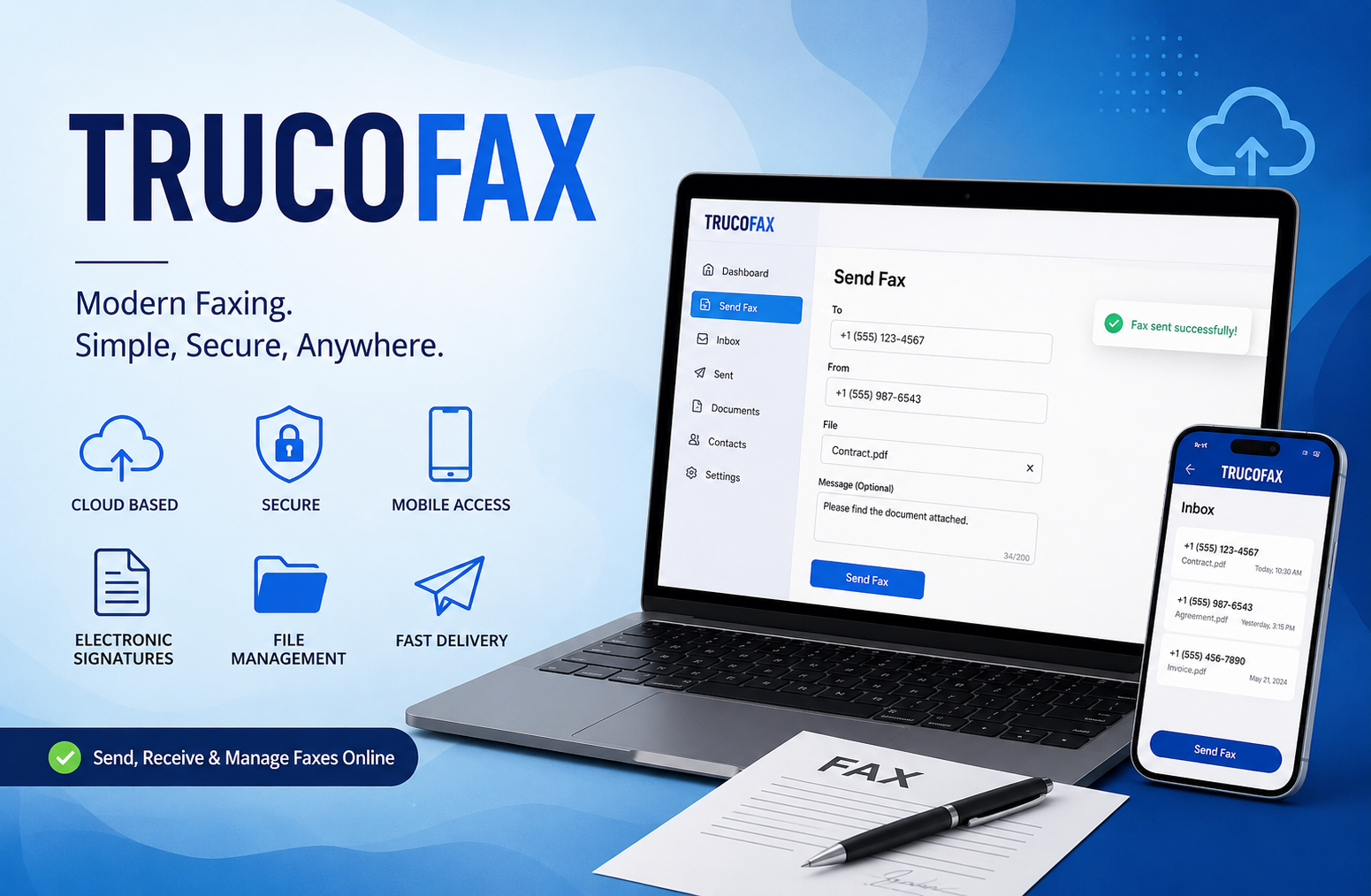
Key Features Often Associated With Trucofax
Users searching for trucofax are typically interested in feature based comparisons. Modern online fax systems commonly include the following functions.
Cloud Based Access
Cloud access allows users to send or receive documents from almost anywhere.
Benefits include:
- Remote accessibility
- Cross device compatibility
- Easy storage management
- Reduced office dependency
This is especially useful for hybrid work environments.
Mobile Compatibility
Modern professionals frequently work from smartphones and tablets.
A digital fax system may allow users to:
- Capture photos of documents
- Convert images into PDFs
- Send files instantly
- Monitor delivery status
Mobile functionality improves convenience significantly.
Document Security
Security remains one of the most important concerns in document transmission.
Reliable systems usually include:
- Encrypted transfers
- Password protection
- User authentication
- Secure cloud storage
Users handling confidential information should always confirm security policies before using any platform.
For cybersecurity best practices, the official guidance from Cybersecurity & Infrastructure Security Agency offers valuable information about secure online communication.
Electronic Signatures
Some platforms integrate digital signature functionality.
This helps users:
- Approve contracts remotely
- Sign business forms
- Complete agreements faster
- Reduce printing requirements
Electronic signatures improve workflow efficiency.
File Organization
Businesses often handle hundreds of documents daily.
Smart organization features may include:
- Folder systems
- Search functionality
- Date filtering
- Download history
- Automatic backups
Efficient organization reduces operational confusion.
Benefits of Using Trucofax Style Systems
Understanding the real world benefits helps explain why businesses continue adopting digital fax technologies.
Faster Communication
Traditional fax machines required physical setup and manual handling.
Cloud based systems reduce delays significantly.
Documents can often be transmitted within minutes.
Lower Costs
Businesses may save money by reducing:
- Printing expenses
- Paper usage
- Hardware maintenance
- Telephone line costs
- Ink replacement
For small businesses, these savings can become meaningful over time.
Better Remote Work Support
Remote teams require digital tools that work from multiple locations.
Online document transmission supports:
- Work from home employees
- Freelancers
- International communication
- Mobile business operations
This flexibility became especially important after the global remote work shift.
Improved Accessibility
Users can often access files from:
- Smartphones
- Tablets
- Laptops
- Desktop computers
This improves convenience for modern professionals.
Reduced Paper Dependency
Many organizations now focus on sustainability and paper reduction.
Digital systems help reduce waste by minimizing printed documentation.
Challenges and Concerns Users Should Understand
No platform is perfect. Users researching trucofax should also understand possible limitations and concerns.
Limited Public Information
One major challenge is the lack of extensive verified public documentation about the platform itself.
Users should always confirm:
- Official ownership
- Privacy policies
- Security standards
- Customer support availability
- Terms of service
Transparency matters when handling sensitive files.
Data Privacy Risks
Any online document platform can present privacy concerns if security is weak.
Potential risks include:
- Unauthorized access
- Data leaks
- Weak encryption
- Poor storage practices
Users should avoid uploading highly sensitive information unless security standards are clearly verified.
Compatibility Issues
Some systems may not integrate smoothly with older office software.
Possible challenges include:
- File format restrictions
- Email delivery issues
- Mobile app limitations
- Browser compatibility problems
Testing the system before full adoption is important.
Learning Curve
New users sometimes struggle when switching from traditional office systems to cloud based workflows.
Training and onboarding may be necessary for teams unfamiliar with digital tools.
Real World Applications of Trucofax Style Platforms
Understanding practical use cases helps users decide whether such systems fit their needs.
Small Businesses
Small companies often need affordable communication systems without expensive office hardware.
Digital faxing helps them:
- Send invoices
- Share contracts
- Communicate with suppliers
- Manage approvals
Freelancers and Consultants
Independent professionals benefit from flexible document sharing tools.
They can:
- Sign agreements remotely
- Send client documents
- Handle proposals digitally
- Work from any location
Healthcare Providers
Healthcare organizations often require secure document transmission.
Digital systems can help streamline communication while reducing paperwork delays.
Educational Institutions
Schools and universities frequently exchange administrative records.
Cloud document transmission simplifies this process.
Legal Professionals
Law firms manage sensitive legal documentation daily.
Secure file delivery remains extremely important in legal workflows.
How Trucofax Reflects Broader Technology Trends
The interest in trucofax reflects larger digital transformation trends happening worldwide.
Businesses increasingly prioritize:
- Automation
- Remote accessibility
- Paperless systems
- Cloud storage
- Mobile productivity
- Secure digital communication
Traditional office infrastructure is gradually being replaced by flexible digital ecosystems.
This trend continues growing because users want systems that save time while reducing complexity.
Important Security Questions Users Should Ask
Before using any document transmission platform, users should ask critical questions.
Is the platform encrypted?
Encryption protects files during transmission.
Does the provider store uploaded files?
Users should understand storage policies clearly.
Is two factor authentication available?
Extra authentication improves account protection.
Are compliance standards explained?
Healthcare and financial industries often require regulatory compliance.
Is customer support accessible?
Reliable support becomes important when urgent documents fail to send.
These questions help users make safer decisions.
Comparing Traditional Faxing and Digital Fax Systems
| Feature | Traditional Fax | Digital Fax Systems |
| Hardware Required | Yes | No |
| Telephone Line | Required | Usually Not Required |
| Mobile Access | Very Limited | Strong |
| Cloud Storage | No | Yes |
| Remote Accessibility | Weak | Excellent |
| Paper Usage | High | Low |
| Setup Complexity | Moderate | Usually Easier |
| Scalability | Limited | Flexible |
This comparison explains why many businesses now prefer digital alternatives.
Common Misunderstandings About Online Faxing
Several misconceptions continue confusing users.
“Fax Technology Is Dead”
This is inaccurate.
While traditional machines declined, digital fax communication still exists in many industries.
“Email Replaced Everything”
Email works well for general communication but not always for regulated document workflows.
Some organizations still require fax compatible systems.
“Digital Faxing Is Complicated”
Modern platforms are usually much simpler than older office hardware systems.
Many tools focus on user friendly interfaces.
“Only Large Companies Need It”
Small businesses, freelancers, and remote workers also benefit from secure document transmission.
Best Practices for Safe Usage
Users exploring trucofax related services should follow smart security habits.
Verify Official Sources
Always confirm you are using the official website or platform.
Avoid suspicious download links.
Use Strong Passwords
Weak passwords increase account vulnerability.
Choose secure combinations with numbers and symbols.
Enable Two Factor Authentication
Extra verification layers improve protection significantly.
Avoid Public WiFi for Sensitive Transfers
Public networks may expose confidential data.
Use secure connections whenever possible.
Review Privacy Policies
Understand:
- Data retention rules
- File storage duration
- User rights
- Security commitments
Transparency is essential.
The Future of Digital Document Communication
The future of systems connected with trucofax style technology appears closely tied to broader cloud communication growth.
Several developments may shape the industry further.
Artificial Intelligence Integration
AI could improve:
- Document sorting
- Error detection
- Automated workflows
- Smart categorization
Better Mobile Experiences
Mobile productivity tools continue improving rapidly.
Stronger Encryption Standards
Cybersecurity concerns will likely push providers toward stronger protection methods.
Workflow Automation
Businesses increasingly want platforms that connect with:
- CRM systems
- Cloud storage
- Accounting software
- Collaboration tools
Automation reduces repetitive tasks.
How Businesses Can Choose the Right Platform
Selecting the right digital communication platform requires careful evaluation.
Important factors include:
Security Reputation
Always prioritize trustworthy providers.
Ease of Use
Complicated software slows productivity.
Pricing Structure
Understand monthly costs, hidden fees, and scalability.
Customer Support
Reliable technical support matters during urgent situations.
Device Compatibility
Ensure the platform works smoothly across all business devices.
SEO and Online Visibility Around Trucofax
Search interest around terms like trucofax often reflects growing curiosity about online business tools and communication technology.
Users searching this topic may be looking for:
- Platform reviews
- Setup guides
- Alternatives
- Security information
- Business use cases
- Troubleshooting help
Content that genuinely answers these needs performs better in modern search engines because search algorithms increasingly reward helpful, experience based information.
Google’s recent updates strongly prioritize:
- User satisfaction
- Original insights
- Trustworthy explanations
- Real expertise
- Clear structure
- Helpful formatting
Thin content and keyword stuffing no longer perform reliably.
Frequently Asked Questions
What is trucofax used for?
Trucofax is generally associated with digital faxing or online document transmission systems used for sharing files securely.
Is trucofax a traditional fax machine?
No. It is more closely related to internet based communication rather than physical fax hardware.
Can businesses use trucofax remotely?
Yes. Modern cloud document systems usually support remote work through mobile and desktop access.
Is digital faxing still relevant today?
Yes. Healthcare, legal, finance, and government sectors still use fax compatible communication methods.
Are online fax systems secure?
Security depends on the provider. Users should verify encryption, privacy policies, and authentication features before use.
Does trucofax reduce paper usage?
Yes. Digital document transmission reduces printing and physical paperwork requirements.
Conclusion
Trucofax represents the growing shift toward digital document communication and cloud based productivity systems. As businesses continue reducing dependence on traditional office hardware, online fax style platforms remain relevant for secure file sharing, remote accessibility, and streamlined workflows.
Although publicly verified information about the exact platform remains limited, the broader technology category connected with digital faxing continues evolving rapidly. Users should focus on security, transparency, ease of use, and compatibility before adopting any service.
The demand for secure digital communication is unlikely to disappear. Organizations across healthcare, finance, education, legal services, and remote business operations still require dependable methods for exchanging documents safely and efficiently.
Understanding how these systems work helps users make smarter decisions while avoiding outdated assumptions about modern fax technology.