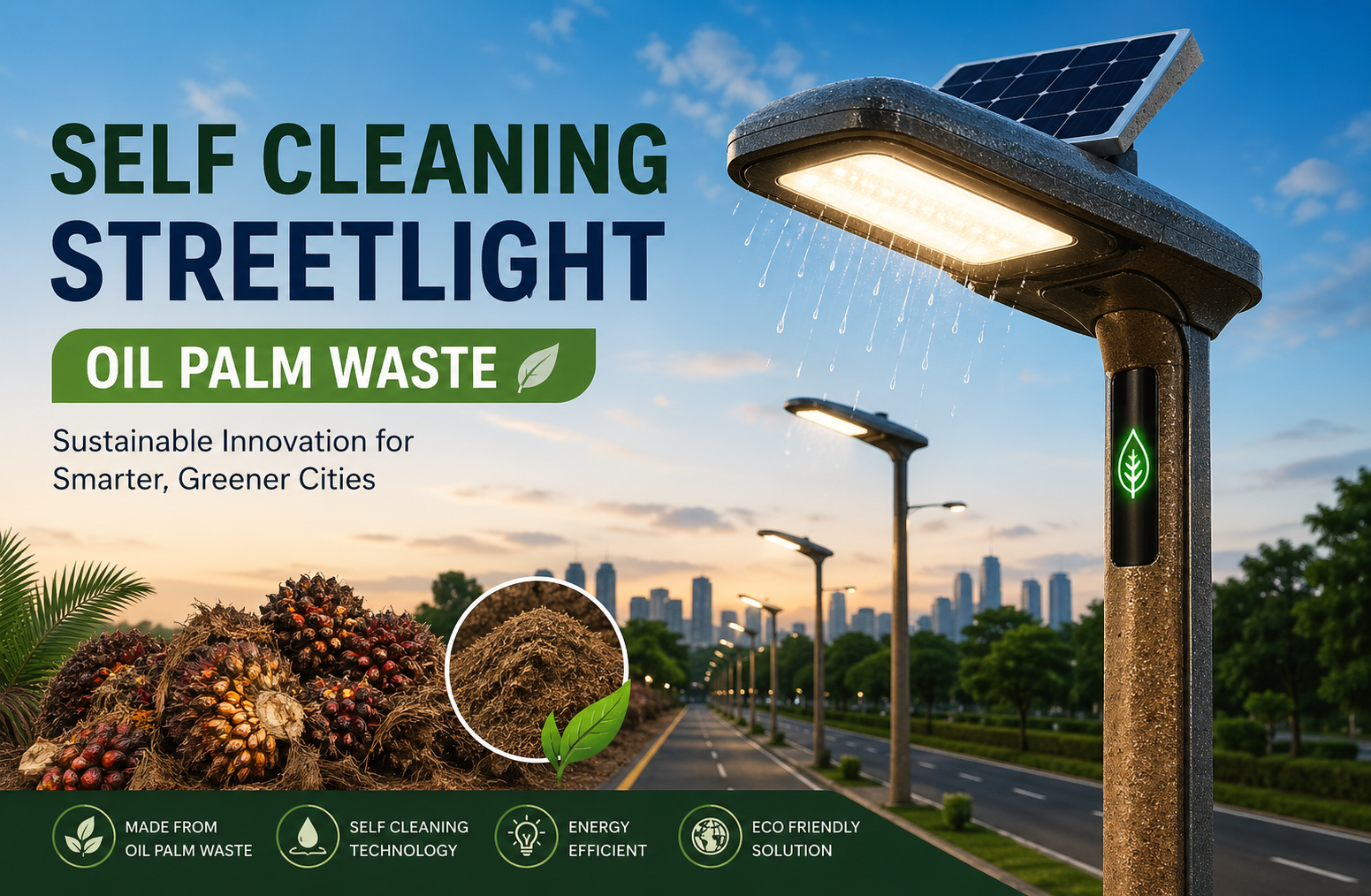
Self Cleaning Streetlights Using Oil Palm Waste
Urban infrastructure is evolving rapidly, driven by sustainability goals, smart city initiatives, and the need to reduce operational costs. Among these innovations, the concept of using oil palm waste in self cleaning streetlights is gaining serious attention. This approach merges renewable materials with intelligent design to create lighting systems that are both eco friendly and low maintenance. According to global sustainability frameworks highlighted by the FAO, agricultural waste reuse plays a key role in reducing environmental impact.
Many readers searching for this topic want to understand what it actually means, how it works, and whether it is practical or just experimental. This article addresses those questions in depth. It explains the technology, explores real world applications, examines benefits and challenges, and provides actionable insights for implementation.
What Is a Self Cleaning Streetlight Using Oil Palm Waste
A self cleaning streetlight powered or supported by oil palm waste refers to a lighting system that incorporates byproducts from oil palm processing into its structure or functionality. These streetlights are designed to reduce dirt accumulation, maintain efficiency, and minimize maintenance efforts.
Oil palm waste includes:
- Empty fruit bunches
- Palm kernel shells
- Palm oil mill effluent
- Fibers and biomass residues
These materials can be processed into:
- Bio based composites for lamp housing
- Activated carbon for filtration or coating
- Bio energy sources for power generation
The self cleaning aspect typically involves:
- Hydrophobic or dust repelling coatings
- Automated cleaning mechanisms
- Smart sensors that detect dirt accumulation
- Rainwater assisted cleaning surfaces
When combined, these features create a streetlight that cleans itself while utilizing sustainable materials derived from agricultural waste.
Why Oil Palm Waste Is a Valuable Resource
Oil palm production generates massive amounts of waste, especially in countries across Southeast Asia and Africa. Traditionally, this waste has been underutilized or burned, contributing to environmental issues.
Using oil palm waste in infrastructure offers several advantages:
Environmental Benefits
- Reduces landfill accumulation
- Lowers carbon emissions from waste burning
- Promotes circular economy practices
Economic Value
- Converts low value waste into high value materials
- Reduces production costs for infrastructure components
- Creates new revenue streams for agricultural sectors
Material Properties
- High fiber strength suitable for composites
- Carbon rich structure useful for filtration and coatings
- Good thermal resistance
According to research published by the Food and Agriculture Organization, agricultural waste reuse plays a critical role in sustainable development and waste reduction strategies globally.
How Self Cleaning Mechanisms Work in Streetlights
Understanding the cleaning process is key to evaluating this technology.
1. Hydrophobic Coatings
These coatings repel water and dust. When rain falls, it carries away dirt particles from the surface. Oil palm derived activated carbon can be used to enhance these coatings.
2. Photocatalytic Surfaces
Some systems use light activated materials that break down organic dirt. This keeps the surface clean and maintains brightness.
3. Smart Sensors
Sensors detect when dirt accumulation reaches a certain level. The system then triggers cleaning actions or alerts maintenance teams.
4. Passive Cleaning Design
Sloped surfaces and smooth materials prevent dust from settling easily. Oil palm composite materials can be engineered for this purpose.
Integration of Oil Palm Waste in Streetlight Design
The integration process involves several engineering steps.
Material Processing
Oil palm waste is treated and converted into usable forms:
- Fibers for composite panels
- Charcoal for activated carbon
- Biomass for energy generation
Structural Components
These materials are used in:
- Lamp casings
- Poles and support structures
- Protective covers
Energy Systems
In some designs, oil palm biomass is converted into bioenergy to power the streetlight, often combined with solar panels for hybrid systems.
Coating Applications
Activated carbon derived from palm waste can be applied as part of self cleaning or pollution absorbing coatings.
Real World Applications and Case Studies
While still emerging, several pilot projects and research initiatives highlight the potential of this technology.
Southeast Asia Initiatives
Countries like Malaysia and Indonesia, major producers of palm oil, are exploring ways to integrate agricultural waste into urban infrastructure. Research institutions are testing composite materials made from palm fibers for durability and weather resistance.
Smart City Projects
Some smart city programs are experimenting with self cleaning lighting systems that reduce maintenance costs. When combined with renewable materials, these projects align with sustainability targets.
Rural Electrification
In remote areas, bioenergy from palm waste can power streetlights where grid electricity is unavailable. This creates a dual benefit of waste utilization and improved public safety.
Benefits of Self Cleaning Streetlights Using Oil Palm Waste
Reduced Maintenance Costs
Traditional streetlights require regular cleaning to maintain brightness. Self cleaning systems significantly cut these costs.
Improved Lighting Efficiency
Clean surfaces ensure maximum light output, improving visibility and safety.
Sustainability
Using agricultural waste reduces reliance on non renewable materials and supports eco friendly infrastructure.
Waste Management Solution
This approach helps manage large volumes of oil palm waste effectively.
Energy Efficiency
When combined with solar or bioenergy systems, these streetlights reduce dependence on fossil fuels.
Challenges and Limitations
No innovation is without its challenges. Understanding these helps in making informed decisions.
Material Durability
Oil palm based composites must be tested for long term exposure to weather conditions such as rain, heat, and UV radiation.
Initial Costs
While maintenance costs are lower, the initial investment in advanced materials and smart systems can be high.
Technical Complexity
Integrating sensors, coatings, and bio based materials requires specialized expertise.
Scalability
Large scale adoption depends on consistent supply chains for processed oil palm waste.
Regulatory Approval
New materials and designs must meet safety and quality standards before widespread use.
Actionable Steps for Implementation
For municipalities, engineers, or businesses interested in adopting this technology, the following steps provide a practical roadmap.
1. Conduct Feasibility Studies
Evaluate local availability of oil palm waste and assess potential cost savings.
2. Partner with Research Institutions
Collaborate with universities or innovation labs working on bio based materials.
3. Pilot Projects
Start with small scale installations to test performance and gather data.
4. Invest in Material Processing
Develop or source facilities capable of converting palm waste into usable materials.
5. Integrate Smart Technology
Include sensors and monitoring systems to maximize efficiency.
6. Monitor and Optimize
Track performance over time and refine the design based on real world data.
Technical Considerations for Engineers
Engineers working on these systems should focus on:
- Load bearing capacity of palm based composites
- Resistance to corrosion and environmental stress
- Compatibility with existing lighting infrastructure
- Efficiency of self cleaning coatings
- Integration with renewable energy systems
Testing and certification are essential to ensure safety and reliability.
Environmental Impact Assessment
Using oil palm waste in infrastructure contributes to sustainability goals, but proper assessment is necessary.
Positive Impacts
- Reduced waste burning
- Lower greenhouse gas emissions
- Conservation of raw materials
Potential Concerns
- Processing emissions if not managed properly
- Transportation impact if materials are sourced from distant locations
Balancing these factors is crucial for achieving true environmental benefits.
Future Trends and Innovations
The future of this technology looks promising, with ongoing advancements in several areas.
Advanced Materials
Development of stronger and more durable bio composites will improve performance.
AI Integration
Artificial intelligence could optimize cleaning schedules and energy usage.
Hybrid Energy Systems
Combining solar, wind, and bioenergy will enhance reliability.
Pollution Absorbing Surfaces
Streetlights may not only clean themselves but also reduce air pollution using advanced coatings.
FAQs
What is oil palm waste used for in streetlights?
Oil palm waste is processed into materials like fibers, composites, and activated carbon, which are used in the structure and coatings of streetlights.
How do self cleaning streetlights reduce maintenance?
They use coatings, smart sensors, and design features that prevent dirt buildup or remove it automatically, reducing the need for manual cleaning.
Are these streetlights cost effective?
They can be cost effective in the long term due to reduced maintenance and energy savings, although initial costs may be higher.
Is the technology widely available?
It is still emerging and mainly used in pilot projects and research initiatives, but adoption is expected to grow.
Can oil palm waste generate energy for streetlights?
Yes, it can be converted into bioenergy, often used alongside solar power in hybrid systems.
Conclusion
The concept of self cleaning streetlights using oil palm waste represents a meaningful step toward sustainable urban infrastructure. It addresses multiple challenges at once, including waste management, maintenance costs, and environmental impact. By transforming agricultural byproducts into functional materials and integrating smart cleaning technologies, this innovation offers both practical and ecological benefits.
While challenges remain in terms of cost, scalability, and material performance, ongoing research and pilot projects suggest strong potential for wider adoption. As cities continue to evolve, solutions like this will play an important role in shaping efficient and sustainable public systems.